Winter and Spring Break Abroad
The Rune's winter break lists stay in Kentucky; its spring break stories go to Thailand, Belize and Nicaragua. What a student brings home from either depends on noticing, and on a notebook.
Put the Rune's two winter break lists side by side and the whole break happens in Kentucky, nearly all of it around Louisville. The December 2016 column sends readers to the light show in the Louisville Mega Cavern, the Louisville Ballet's Nutcracker, the Old Louisville Holiday Home Tour and a Nutcracker on ice. The second list, printed that same winter, is homier still: bake cookies, clean out the closet, hike at Bernheim. Nobody on either page is at an airport.
Then spring comes and the paper leaves the country. Over spring break 2017, fifteen students and three teachers flew to Thailand to care for elephants, and ten students took their passports to Belize to build a house. Three years earlier a dozen students had spent their spring break in Nicaragua. What stands out in the write-ups is not the distance but how much the reporters noticed once they arrived.
Many families travel over the breaks, on school trips and on their own, and a trip abroad gives a student something that outlasts the photos: the habit of paying attention to a place, a language and the people in it, and the habit of writing it down while it is fresh. The second habit turns a week away into something a student can use for years, and it works on a family vacation as well as on a mission trip.
What the reporters noticed abroad
The Thailand story runs 238 words and still records a great deal. The group left on Saturday, April 1, and spent most of their time at an elephant conservatory in rural areas, four days of riding, feeding, washing and observing the elephants. Then came Chiang Mai, with a Buddhist temple, a 3D museum and a Thai boxing class. One student said the time change hit harder on the way home; another counted 39 hours of travel to get back. Those particulars vanish within a month unless someone writes them down.
The Belize story is just as specific about people. The ten students worked through Hand in Hand Ministries on a house for an elderly woman, and the chaperone's account of who else showed up makes the trip real: local women who had already received a house from the ministry, and women still on the waiting list for one, all working on the same walls. The chaperone also described the ministry's "starfish" approach of helping one person at a time, a phrase that makes the most sense after you have watched the work being done.
The oldest of the three is a first-person account of the 2014 spring break trip to Nicaragua, the closest thing in the archive to a travel journal. The group left on March 30 and the story appeared on April 15, so the writer set it down within about two weeks of landing. Days began at 7:00 a.m. The second half of each day went to a children's education program or to exploring the city of Managua, and one day the group took a bus to the rim of a volcano. "we were always moving," the writer says, and the schedule around the sentence makes it believable.
Language comes first, and it comes home with you
The Thailand and Nicaragua stories both mention the language gap, and neither treats it as a wall. The Thailand group reported a strong language barrier and also that everyone they met was "kind and welcoming." A 2016 profile of a new Spanish teacher, herself a 2011 graduate of the school, shows where that leads: she spent a college semester in France mainly to learn to speak by conversing with the people there, then four weeks in Ecuador during her student teaching. The profile quotes her goal plainly: to "up my language game" with native speakers.
A student does not need a semester for the effect to start. A week is enough if the family decides in advance that the student with two years of Spanish is the one who asks for the table, reads the menu aloud and talks to the person at the fruit stand. Learn twenty phrases before the flight, greetings and numbers and how to say you do not understand, then use them with strangers who are not paid to be patient. That is the exercise a classroom cannot provide.
A family week in the Caribbean
Take the Dominican Republic as a general example, and Punta Cana in particular, because it is a popular choice for families over winter and spring break. Nothing in the archive places a Sacred Heart group there; it is simply a common trip. The easy version of the week never leaves the resort. The better version leaves it at least twice.
Leaving means seeing the country the resort was built in: a public beach up the coast where local families spend Sunday, a market town inland with a church at its center, a fishing village to the southwest. Spanish is on every sign and in every conversation past the resort gate, which is the point for a student studying it. Order lunch in it. Ask the price of mangoes in it. Write down the answer.
Many parents handle this by picking up a car at the airport on arrival, and car rentals in Punta Cana are set up for exactly that. A car makes the public beach and the inland town possible on your own schedule rather than a tour bus's. Before booking, read what the company requires for age and documents, ask what the insurance covers, and check the car for scratches before pulling out.
Driving there asks for the same common sense as driving anywhere unfamiliar. Motorbikes are everywhere, pass on both sides and often carry two or three people, so check the mirrors more than you would at home. Towns use speed bumps freely and not all are painted. Do most driving in daylight, keep speeds modest on rural roads, fill the tank when you see a station, keep some local cash for tolls and fuel, and download the map area before leaving the resort's wifi.
Staying in touch is the part teenagers can own. Before the trip, check with the phone carrier about international use or plan on a local SIM at the airport. Each morning, tell someone at home or at the front desk where you are headed and when you expect to be back. Keep a photo of each passport on two phones, the resort's address on paper in the glove box, and a meeting point in case the group splits up. All of it is easier to decide at a kitchen table in Louisville than in a parking lot in the heat.
The notebook, not just the camera roll
Photos record what a place looked like. They do not record what it sounded like at six in the morning, what the bread cost, or what the student thought about any of it. A notebook does. Ten minutes each evening is enough. Write particulars, not verdicts: the names of foods, the color of the water, three Spanish words heard that day and what they meant, one thing that went wrong and how it was fixed, one conversation with someone who lives there.
Those notes are raw material for the assignment that arrives sooner or later, in English or Spanish class or on a college application. A descriptive essay lives or dies on this kind of detail, and a student who has it in a notebook is weeks ahead of one working from memory. A guide to writing a descriptive essay explains how to organize sensory detail around a single dominant impression, which is far easier when the details were caught on the day.
A few prompts set before leaving keep the notebook from becoming a list of meals:
- What did I see today that I would not see in Louisville?
- What was said to me in another language, and what did I manage to say back?
- Which moment would I describe first to someone who has never been here?
What the record becomes
The Rune's reporters wrote because a story was due, and the archive is what resulted: a Thai boxing class and an 11-hour time difference, women on a waiting list building a stranger's house, a bus to a volcano. Years later those details still read as true because they were written down close to the event. A student's travel notebook works the same way. The Spanish teacher gets a paragraph about a market, and the English teacher an essay with a real beach in it.
None of it requires a passport. The winter break columns were right that Louisville has plenty to notice, from the light show under the city to the trails at Bernheim. The trip abroad simply raises the stakes, because most of what the student sees will be new and gone from memory by Easter unless it was caught on paper. Pack the notebook next to the passport, and read it on the flight home.
Quick questions
Does a student have to go abroad to get something out of a break?
No. The Rune's own winter break columns never leave Kentucky, and the notebook habit works on a hike at Bernheim as well as on a beach in another country. Going abroad raises the stakes because more of what the student sees is new, but the practice of noticing and writing it down is the same anywhere.
Is renting a car in Punta Cana a sensible choice for a family with teenagers?
For many families, yes, because it is the simplest way to leave the resort on your own schedule. Read the rental company's requirements before booking, ask what the insurance covers, drive mostly in daylight, watch for motorbikes and unpainted speed bumps, and keep the resort's address and some local cash in the car.
What should a student write in a travel notebook each day?
Particulars rather than verdicts: what things cost, what the food was called, a few words heard in the local language and what they meant, one conversation with a resident, and one problem and how it was solved. Ten minutes each evening is enough, and those notes later become a descriptive essay or a Spanish class paragraph.
Stories discussed here
Fun Things To Do Over Christmas Break
The Rune suggests five Christmas break activities, including Lights Under Louisville, the Louisville Ballet Nutcracker, and the Old Louisville Holiday Home Tour.
Five Things To Do Over Winter Break
The Rune suggests baking, cleaning out a closet, a girls night, the 21c museum and a hike at Bernheim Forest for winter break.
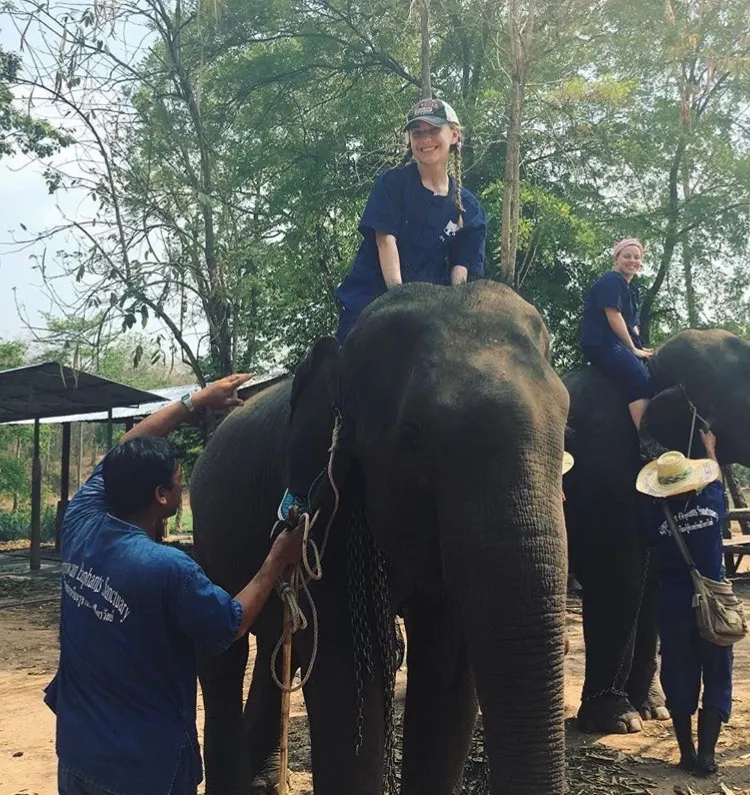
Travels to Thailand
Fifteen Sacred Heart students and three teachers spent spring break caring for elephants in Thailand and touring Chiang Mai.
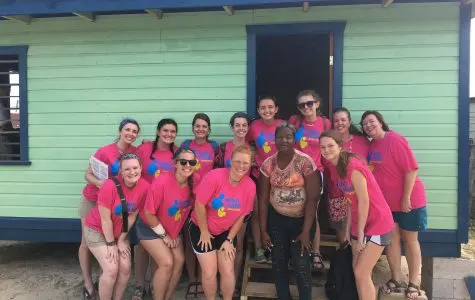
Building Houses and Bonds on Belize Mission Trip
Ten Sacred Heart students spent spring break in Belize with Hand in Hand Ministries, building a home for an elderly local woman named Judith.
SHA Students Dedicate Spring Break to Helping Others
Twelve Sacred Heart girls spent spring break helping build a concrete house in Nicaragua and spending time with local children.
World Traveler Comes Home to Teach at Sacred Heart
Alumna Rachel Walters, class of 2011, returned to teach Spanish I and II after studying in France, student teaching in Ecuador and leading senior retreats.
More from the Reading Room
All piecesWhat a School Newspaper Teaches About Writing
Student reporters learn to put the point first, let sources speak, and cut what does not earn its place. Six articles from the archive show how, and how the same habits carry into essays.
Student Athletes and the College Essay
Signing ceremonies and state titles make headlines, not essays. Here is how to find the moment, the role and the honest sentence inside a season, drawing on the Rune's sports pages.
From Service Trip to Application Essay
The sentence every service essay reaches for is the one to cut. The Rune's coverage of mission trips, gift drives and a dance marathon shows what to keep instead.
Team Trips and College Visits
Tournaments in Las Vegas and Ohio, an art trip to New York, spring break in Belize and Thailand, and the campus visits seniors arrange themselves. What the archive shows about budgets, schedules and paperwork.