Team Trips and College Visits
Tournaments in Las Vegas and Ohio, an art trip to New York, spring break in Belize and Thailand, and the campus visits seniors arrange themselves. What the archive shows about budgets, schedules and paperwork.
The fall sports roundup the Rune printed in October 2012 is organized by travel. Each team's line begins with where it went: soccer to Zionsville, Indiana, golf to Bowling Green for the state tournament, field hockey to Chicago and Pennsylvania, volleyball to Las Vegas, Cincinnati and Gatlinburg, cross country to Lexington, Indiana and Ohio. Read that roundup once and the season looks less like a schedule of games than a schedule of buses.
That is a fair picture of a high school year for many families. Between tournaments, a department trip, a spring break mission and the campus visits seniors make on their own, a student might spend a dozen nights a year away from home with a group, and a parent might spend as many hours arranging it. The archive has no article about how any of these trips were planned, but it has plenty of evidence about what they required.
Three kinds of trips turn up: team trips arranged by coaches, program trips arranged by a department or a ministry partner, and college visits arranged by the family alone. All of them share a budget, a schedule, a chaperone question, and what comes home afterward besides laundry.
Who arranges what, and what that leaves for you
Team travel is the easiest kind to be a passenger on, because someone else owns the calendar. In September 2016 the volleyball team beat Assumption in the final of the Louisville Invitational, and the tournament report closes by noting that the team would travel to Las Vegas the following weekend for the Durango Fall Classic. A tournament like that has an entry deadline, a hotel block and a travel day, all set by the coaching staff and the host months before the first serve.
What a team trip leaves for the family is narrower but not nothing: the permission form, the medical information, the spending money, and the homework collected before departure. The cross country coverage shows how dense a season can get. In the fall of 2016 the team raced in Kettering, Ohio, on September 24, which the Rune's report called the "first out of town race of the season," then in Cary, North Carolina, the next Saturday, then in Lexington in October. The next fall it was Hilliard, Ohio, then Lexington, then Versailles, on consecutive Saturdays. The family's job is to know the whole list in August, not one week at a time.
Program trips sit in between. The art department's October 2016 trip to New York was a department trip. The spring break trips to Belize and Nicaragua ran through Hand in Hand Ministries. For those, a family signs on to a plan someone else built and pays a share of it, usually in installments. The questions to ask early are who holds the money, when each payment is due, what is refundable, and how many adults go with how many students. A school that runs these trips every year will have the answers on paper. Ask for the paper.
Bus or plane is the budget
Almost every cost on a trip follows from one decision: whether the group rides or flies. The New York story describes a bus ride from the school to a hotel in New Jersey and calls the whole thing a "trek of over 15 hours." A bus keeps the per-student cost down and puts the group within reach of hotel rates across the river from Manhattan, at the price of a long day on each end.
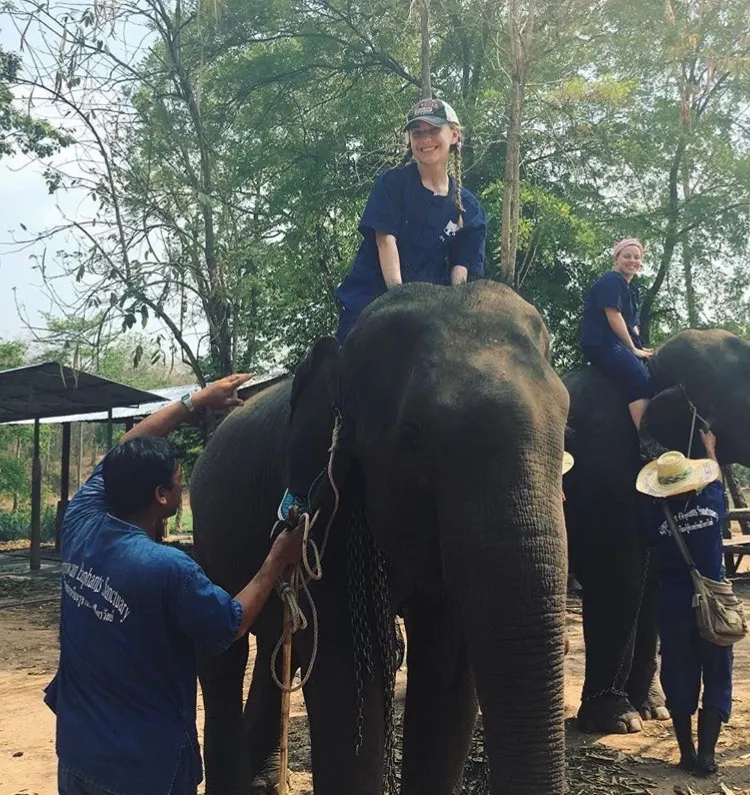
Flying changes the arithmetic. The Thailand trip in April 2017 involved 15 students and three teachers, an 11-hour time difference, and, by one student's count, 39 hours of travel on the way home. The costs that are easy to forget live around the flight: ground transportation at the far end, meals in airports, a hotel night if the connection does not line up, and a day of school lost on each side. The same list applies to a Las Vegas tournament on a smaller scale.
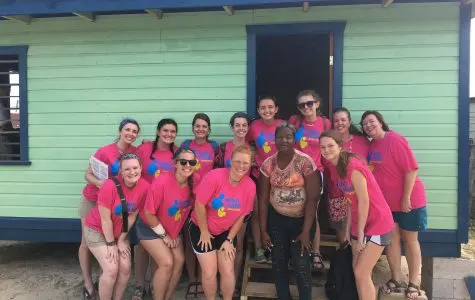
International service trips add paperwork with lead time attached. The Belize story opens with students taking their passports to Hand in Hand Ministries for a week of building a house for an elderly woman, alongside local women who had received homes from the ministry or were still waiting for one. A passport for a minor has to be applied for in person and takes weeks to arrive, which is why organizers set the document deadline months out. Put the passport and any clinic visit on the calendar the day you sign up.
Build the schedule around the event, then protect the edges
A trip schedule has a fixed center and soft edges. The center is the thing you went for. The New York itinerary ran the Met on the first day, the Museum of Modern Art and a tour of the Parsons School of Art and Design on the second, and the Whitney, the Guggenheim and the Cloisters on the third. The mornings are spoken for.
The edges are where plans fail. The Thailand group left on a Saturday, flew home on a Sunday and landed Monday night, and one student told the paper the time change was harder on the return than on the way out. The fix is to write the trip on the calendar as two days longer than it is, and to tell teachers the real dates before the trip rather than after. What is worth having in writing before anyone leaves is short:
- Departure and return times to the hour, including the drive to the airport or bus lot.
- The name and phone number of the adult trip lead, and the hotel address.
- The payment schedule, the refund terms, and the homework arrangement agreed with each teacher.
College visits that are a flight away
The college visit is the one trip a family builds alone, and seniors often end up looking at campuses a plane ride from Louisville. The archive's January 2017 college panel is worth reading before booking anything. Fourteen alumnae came back to talk with juniors and seniors, and distance from home was one of the worries the alumnae addressed. A 2014 graduate at the University of Louisville told the panel that "the biggest pro about staying local is the networking." The panel story does not settle the distance question, which is the point. You settle it by going and looking.
Narrow the list before you buy a ticket. A flight-and-hotel visit costs enough that it should go to schools that have already survived a first cut on program, size, cost and admission profile. An online college finder is a reasonable way to make that cut from the kitchen table, and it tends to turn a vague interest in somewhere out West into three or four named campuses that can share one trip.
Take Utah as a general example, chosen because the logistics are typical, not because any Sacred Heart student went there. A family looking at the University of Utah in Salt Lake City would fly into Salt Lake City International Airport, a few miles west of downtown. From the terminal the usual choices apply: a rental car, a rideshare, the light rail line that serves the airport, or a car booked ahead. The campus is on the east side of the city, above downtown, so the trip from the airport crosses the valley floor.
For a family landing in the evening with a tour the next morning, Salt Lake City airport transportation arranged in advance removes the one variable you cannot control from Kentucky, which is the rental counter line when you land. Book the official tour through the admissions office before the flight, since those slots fill in spring and fall. Two campuses in one day is possible if they are close. Three is a mistake.
What to bring home in writing
The Rune's reporters came home from every trip with a story, and that is a habit worth copying even when nobody will publish it. For a team trip, write down the results and the travel facts the next team will need: which hotel, how far from the venue, what went wrong with the schedule. For a program trip, bring home the receipts and the names. The Belize chaperone's observation that local women still on the waiting list for a house came to work on someone else's is the sort of detail that disappears within a month unless someone writes it down the week they return.
For a college visit, write the same evening: what the guide said about housing, the admissions contact, the distance from the airport, and one plain sentence about whether the student could picture living there. Keep it in one shared document so that when decisions arrive in the spring the family is comparing notes rather than memories. The planning behind every trip in this archive is invisible on the page, which is the best thing that can be said about planning.
Quick questions
Who pays for a team trip like a tournament in Las Vegas?
It depends on the program. The archive reports where teams went, not what it cost, so ask the coach early for a written breakdown of what the team or school covers and what each family pays, when payments are due, and whether parents traveling separately are expected to book their own rooms.
How far ahead should a family book a college visit that requires a flight?
Several weeks at least, and longer in spring and fall when admissions tours fill. Narrow the list first, then request the official tour, then book flights and ground transportation around that confirmed time. Leave the arrival evening free and keep the visit to one or two campuses a day.
Do students need a passport for a mission trip to Belize or Nicaragua?
Yes. Both trips in the archive were international, and a passport for a minor must be applied for in person and takes weeks to arrive. Organizers usually set a document deadline months before departure. Start the application the day you sign up, and check whether any vaccinations are required.
Stories discussed here
SHA Fall Sports Highlights
A roundup of Sacred Heart's fall 2012 sports, including a second straight state golf title, cross country invitational wins, and volleyball's regional finals run.
Sacred Heart Takes Down Assumption at LIVT
Sacred Heart volleyball beat Assumption 2-1 in the LIVT finals, avenging an Aug. 31 loss, and then traveled to Las Vegas.
Valkyries Race at Midwest Catholic Championships
Sacred Heart cross country took ninth place at the Midwest Catholic Championships in Kettering, Ohio, and third in the open race.
Big Apple Welcomes Valkyrie Art Students
Sacred Heart art students visited New York City museums and Parsons School of Design for inspiration, and saw Phantom of the Opera on Broadway.
Travels to Thailand
Fifteen Sacred Heart students and three teachers spent spring break caring for elephants in Thailand and touring Chiang Mai.
Building Houses and Bonds on Belize Mission Trip
Ten Sacred Heart students spent spring break in Belize with Hand in Hand Ministries, building a home for an elderly local woman named Judith.
More from the Reading Room
All piecesWhat a School Newspaper Teaches About Writing
Student reporters learn to put the point first, let sources speak, and cut what does not earn its place. Six articles from the archive show how, and how the same habits carry into essays.
Student Athletes and the College Essay
Signing ceremonies and state titles make headlines, not essays. Here is how to find the moment, the role and the honest sentence inside a season, drawing on the Rune's sports pages.
From Service Trip to Application Essay
The sentence every service essay reaches for is the one to cut. The Rune's coverage of mission trips, gift drives and a dance marathon shows what to keep instead.
Winter and Spring Break Abroad
The Rune's winter break lists stay in Kentucky; its spring break stories go to Thailand, Belize and Nicaragua. What a student brings home from either depends on noticing, and on a notebook.