What a School Newspaper Teaches About Writing
Student reporters learn to put the point first, let sources speak, and cut what does not earn its place. Six articles from the archive show how, and how the same habits carry into essays.
On a Sunday night in September 2017, the Sacred Heart soccer team beat Assumption 2-1 and kept a trophy called the Jenna Cooper Cleat Cup. The Rune's write-up of that game runs 236 words. It gives you the score in the first sentence, who scored and when, who was named MVP for each side, what one senior said afterward, and the kickoff time of the next home game. Nothing is missing and nothing is padded.
That is the thing a school newspaper teaches that an English class usually does not. A reporter writes for someone who was not there, who has about ninety seconds, and who will stop reading the moment the story stops being useful. Those conditions force habits, and the habits carry straight into a college application essay, a history paper or a cover letter. This piece walks through five of them, using articles from the archive as the examples.
Put the point in the first sentence
Newsrooms call the opening the lede, and the oldest rule about it is that it answers the question the reader is actually asking. For a game, the question is who won. The Cleat Cup story opens with the result and the stakes in a single line, then rewinds to explain how the game got there: Assumption scored first off a rebound with 23 minutes left, a Sacred Heart junior evened it less than five minutes later, and the winner came with ten minutes to play. The chronology is all there, but it sits underneath the result rather than in front of it. A reader who stops after one sentence still leaves with the news.
Feature writing bends the rule rather than breaking it. A 2017 profile of a new English teacher opens with the line "Not even teachers are immune to stereotypes," then explains that the teacher, a former high school and college football player, had assumed early on that he was destined to teach history. The profile still delivers its point in the first sentence; the point is simply an idea instead of a score. The lesson for essay writers is the same either way. If a reader can finish your opening paragraph without knowing what the piece is about, the paragraph is not finished.
Let people talk, then say who is talking
Quotes are where student reporting most often goes wrong and where it most often shines. The working rule is simple. A quote earns its place when it says something the reporter could not say as well in summary, and every quote needs a name attached, along with a reason that name should matter to the reader.
The archive's coverage of a 2016 field hockey loss to Assumption shows both halves of the rule. The Mug Game story gives the goals and the clock, three for Sacred Heart in the first twenty minutes and three for Assumption in the first ten minutes of the second half, then hands the microphone to the head coach, who says the team "came out flat," and to the senior goalkeeper and captain, who describes a domino effect of mistakes once the other side kept scoring. The writers do not editorialize about the collapse. They let the two people best placed to judge it do the judging, and they tell you exactly who those people are.
Compare that to the temptation every first-year reporter feels, which is to quote a friend saying the game was fun. Quotes like that turn up in student papers everywhere. They are harmless, but they teach nothing, because the reader learns nothing from them that the writer could not have stated outright. The same test applies to the quotes in an essay. If the sentence before the quotation already says what the quotation says, one of the two has to go.
Attribution is a form of honesty
One of the more ambitious pieces of reporting in the archive is a January 2017 story about senior portraits. Seniors had received yearbook photos that had been heavily retouched, with makeup added and facial features altered, and the article asked the studio about it. The resulting article does several things a strong essay also does. It states the problem plainly in the opening. It quotes the people affected. It quotes the studio's written letter to the affected seniors. And it asks the studio's representative further about the portraits, which produced an explanation that a lab employee had been "a little overzealous" and was no longer working in the lab.
Notice what the writer does not do. The writer does not guess at the studio's motives, and the studio's own explanation gets its own space in the piece. Most claims in the story belong to someone, and the reader can see whose. That discipline, giving each idea an owner, is what college instructors mean when they ask for sources, and it is far easier to learn on a story about yearbook photos than on a research paper due Friday.
Structure is the part you can borrow
Read enough of the archive and you start to see the skeletons under the stories. A news brief runs result, context, detail, quote, what comes next. A profile runs hook, background, turning point, quote, present day. A recap of a class activity, like the 2016 story on forensic science students working mock crime scenes, runs setup (a detective sergeant staged four scenes on the third floor), process (groups with assigned roles rotated through, with fifteen minutes at each scene), and payoff (the groups shared their final thoughts and saw how their conclusions varied). A student quoted near the end says she learned "how difficult it is to work with so little," which gives a personal reaction to what the writer reports the exercise showed.
These shapes are not a secret, and using them is not cheating. Expository writing in particular rewards a writer who settles the shape before drafting, and a step-by-step guide to expository essays will show you the same setup, process, payoff pattern under different names. The forensic science story would make a perfectly good expository essay with the quotes swapped for citations and the kicker turned into a thesis.
Revision is where the writing happens
Nobody at a student paper files a clean first draft, and the archive contains a story about that too, though it concerns a different kind of writing. In the fall of 2017 the school's full International Baccalaureate diploma students turned in 4,000-word extended essays they had begun the previous January. One student told the paper there were some weeks early on when she did not look at the essay at all, and that she would then work more on it before a "mini-deadline." Her supervisor, a history teacher, described his role as offering advice, questioning the research and keeping the student on track, and he was clear that it was not to edit or correct. The article is short, but it captures the two things that make long writing possible: a run of small deadlines, and a reader who asks questions instead of fixing sentences for you.
Reporters get the same treatment from an editor, usually with less notice. The cure for a bloated draft is to ask of every paragraph what the reader would lose without it, and to cut the ones with no good answer. The cure for a thin draft is to go back and ask the source another question, or to read one more document. Both of those are revision. Neither one is about commas.
Try it on one story
If you want to practice, pick any article in this archive and do three things. First, rewrite the opening sentence so that it answers the reader's first question in fewer words. Second, find every quote and ask whether the sentence before it already said the same thing; if it did, cut one of them. Third, sketch the skeleton, four or five labels at most, and see whether any paragraph is out of order. An online outline builder makes the third step quick, and once you have done it for someone else's story you will find it hard not to do it for your own.
The reporters whose work fills this archive were fifteen to eighteen years old, writing between classes, for readers who could walk up and argue with them at lunch. Those are good conditions for learning to be clear. The rest of us can borrow them.
Quick questions
What is a lede, and why does it matter outside journalism?
The lede is the opening of a news story, and its job is to answer the reader's first question right away. Outside journalism the same habit applies: an essay or report whose first paragraph states the point is easier to read, easier to grade, and harder to misunderstand.
How many quotes should a short article or essay include?
Fewer than most first drafts contain. A quote earns its place when it says something the writer could not summarize as well, and when the reader is told who said it and why that person's view matters. Two strong quotes beat six weak ones.
Can I use these archive articles as writing models in class?
Yes. They are short, they were written by students under deadline, and each one has a visible structure. Rewriting an opening sentence, trimming a redundant quote, or sketching the skeleton of a story are all exercises a teacher can assign from a single article.
Stories discussed here
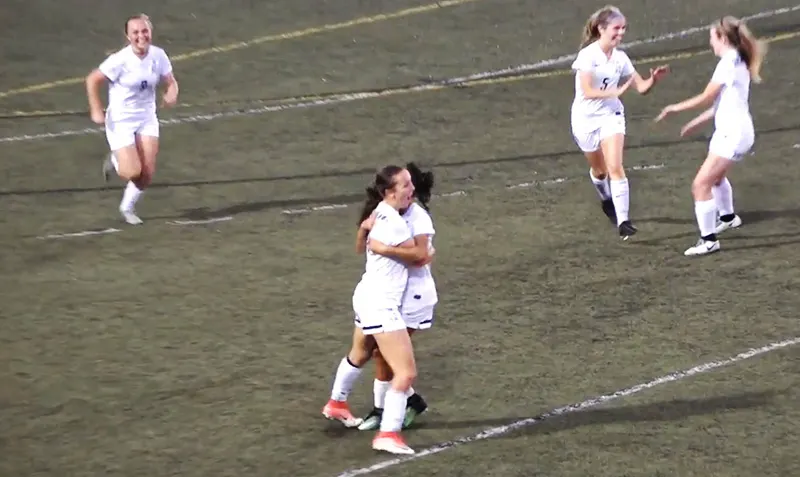
Valkyries Keep the Cleat Cup
Sacred Heart beat Assumption 2-1 on a late goal from Kiley Polk to keep the Jenna Cooper Cleat Cup for another year.
Introducing Mr. Homrich
New English teacher Alden Homrich, a former football player and Centre College graduate, talks about how he moved from history to English.
Field Hockey Falls Short In Annual Mug Game
Sacred Heart led Assumption 3-1 in the Mug Game, then allowed three second-half goals in the first 10 minutes and lost 4-3.
The Face of a Valkyrie
Seniors reported heavily retouched yearbook portraits, and Miller Photography said a lab employee went too far and offered to redo any portrait on request.
Forensic Science Classes Participate in Mock Crime Scenes
Forensic science students worked four mock crime scenes on the third floor, set up by a St. Matthews crime scene unit detective.
IB Diploma students turn in Extended Essays
After nine months of work, Sacred Heart's IB Diploma students turned in 4,000 word extended essays and celebrated with breakfast and a dress-down day.
More from the Reading Room
All piecesStudent Athletes and the College Essay
Signing ceremonies and state titles make headlines, not essays. Here is how to find the moment, the role and the honest sentence inside a season, drawing on the Rune's sports pages.
From Service Trip to Application Essay
The sentence every service essay reaches for is the one to cut. The Rune's coverage of mission trips, gift drives and a dance marathon shows what to keep instead.
Team Trips and College Visits
Tournaments in Las Vegas and Ohio, an art trip to New York, spring break in Belize and Thailand, and the campus visits seniors arrange themselves. What the archive shows about budgets, schedules and paperwork.
Winter and Spring Break Abroad
The Rune's winter break lists stay in Kentucky; its spring break stories go to Thailand, Belize and Nicaragua. What a student brings home from either depends on noticing, and on a notebook.